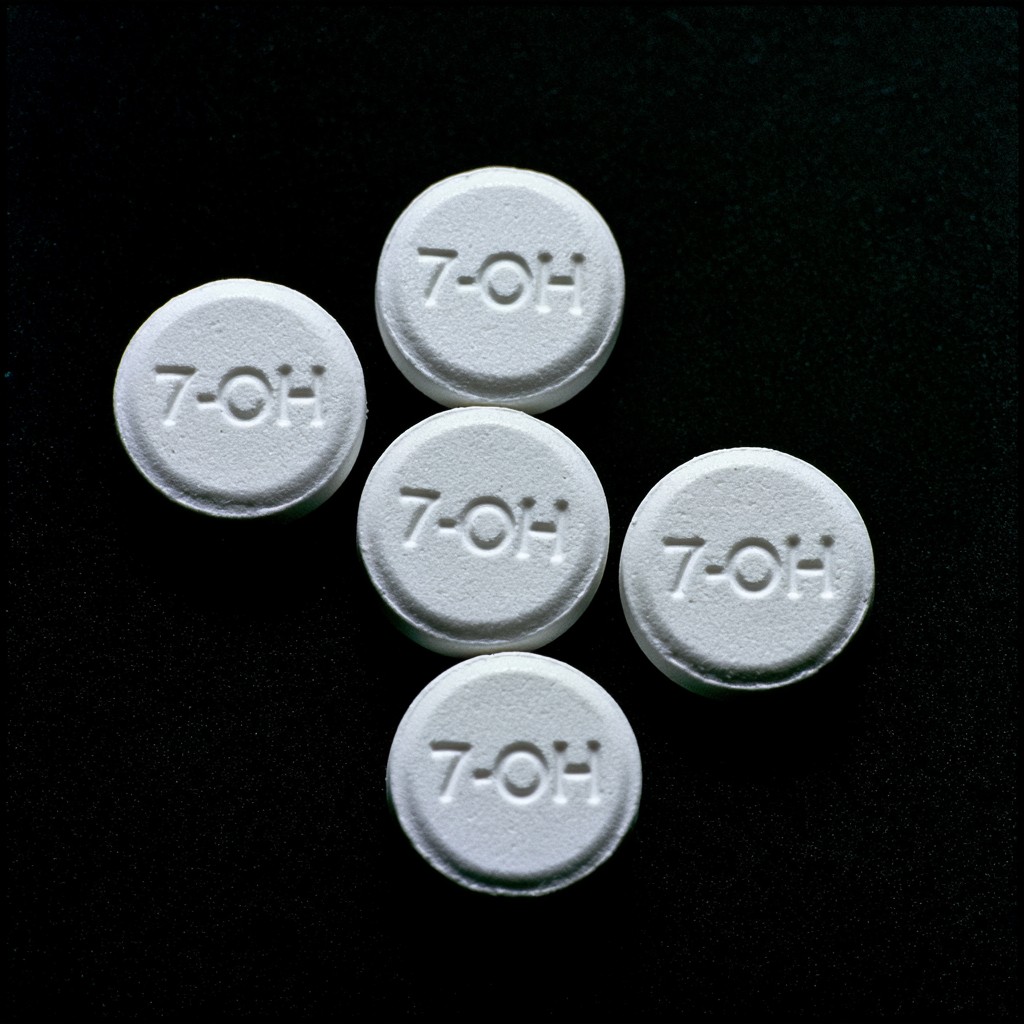
A standard 7 hydroxymitragynine drug test is not part of routine workplace or medical screenings, but specialized labs can detect 7-OH and its metabolites in urine, blood, or hair using targeted mass spectrometry tests. 7-hydroxymitragynine (7-OH) is a potent, concentrated alkaloid derived from kratom that binds more strongly to opioid receptors than kratom’s natural mitragynine, making it more likely to cause dependence and appear on advanced toxicology panels.
- 7-OH is a concentrated, semi-synthetic compound derived from or enhanced within kratom, not the same as raw kratom leaf.
- Standard 5-panel and 10-panel drug tests do not detect 7-OH or kratom; specific lab-developed tests are required.
- 7-OH binds opioid receptors more strongly than mitragynine, raising overdose and dependence risk.
- Products marketed as ‘kratom extract’ or ‘7-OH shots’ often contain much higher concentrations than natural leaf.
- Regular 7-OH use can lead to physical dependence requiring medical detox and structured addiction treatment.
What Is 7-Hydroxymitragynine (7-OH)?
7-Hydroxymitragynine (7-OH) is a potent alkaloid naturally present in trace amounts in kratom leaf, now often chemically concentrated in synthetic or semi-synthetic products to produce stronger opioid-like effects. Raw kratom leaf contains mostly mitragynine, with 7-OH making up a very small fraction of the plant’s total alkaloid content. Modern manufacturers have found ways to isolate and boost 7-OH levels far beyond what occurs in nature.
This concentrated form now shows up in vape pens, pressed tablets, and small “extract shots” sold in gas stations and smoke shops. These products are marketed as quick energy boosters or mood enhancers, but the actual alkaloid content can be dozens of times stronger than a cup of traditional kratom tea. Because 7-OH activates opioid receptors more intensely than mitragynine, it carries a much higher risk of tolerance and dependence.
Federal agencies have taken notice of this shift. According to NIDA research on kratom, the plant’s alkaloid profile is complex, and products that isolate specific compounds like 7-OH behave differently in the body than whole-leaf kratom. This distinction matters for anyone trying to understand why concentrated 7-OH products carry different risks than traditional kratom use.
How Is 7-OH Different From Regular Kratom?
The difference between raw kratom and concentrated 7-OH products comes down to potency, composition, and legal treatment. Understanding these differences helps explain why 7-OH products carry a higher addiction risk than the plant they come from.
| Feature | Raw Kratom Leaf | Concentrated 7-OH Products |
|---|---|---|
| Main alkaloid | Mitragynine (up to 66% of alkaloid content) | 7-hydroxymitragynine, artificially boosted |
| Typical 7-OH content | Less than 2% of total alkaloids | Can be 10 to 50 times more concentrated |
| Common forms | Loose leaf powder, tea, capsules | Vape pens, extract shots, pressed tablets |
| Addiction risk | Moderate, similar to mild opioid exposure | High, comparable to prescription opioid misuse |
| Legal status | Legal in most states, banned in a few | Increasingly restricted or banned as states respond |
Legal status for both kratom and 7-OH varies widely and continues to change as state legislatures respond to new safety data. For current federal scheduling and classification details, the DEA drug fact sheets outline how these compounds are currently treated under law.
Will a 7-Hydroxymitragynine Drug Test Detect It?
Whether a drug test catches 7-OH depends entirely on the type of test ordered. Here is what actually happens during common testing scenarios.
- Standard 5-panel tests miss it completely. These basic workplace tests screen for THC, cocaine, opiates, amphetamines, and PCP. Neither kratom nor 7-OH appears on this list.
- Extended 10-panel tests still don’t catch it. Even expanded panels used for some employment or legal screenings do not include kratom alkaloids unless specifically requested.
- Specialty lab tests can detect it. Labs using liquid chromatography-mass spectrometry (LC-MS) can identify mitragynine and 7-OH metabolites in urine, blood, or hair samples when specifically ordered by a physician or treatment center.
- Urine detection windows are short. 7-OH and its metabolites are typically detectable in urine for 1 to 3 days after last use, though heavier or chronic use can extend this window.
- Hair testing offers a longer lookback. Hair follicle testing can detect kratom alkaloid use going back up to 90 days, making it useful for treatment monitoring rather than one-time screening.
- Dose and frequency change everything. Someone using high-concentration 7-OH products daily will show detectable metabolites longer than an occasional user of traditional kratom tea.
If you’re worried about how much 7-OH you or someone you love is using, Lighthouse Recovery can help you figure out the safest next move. Verify your insurance with Lighthouse or call us at (214) 717-5884.
What Are the Signs of 7-OH Dependence?
Recognizing dependence early makes treatment easier and safer. Watch for these common warning signs in yourself or someone you care about.
- Strong cravings for 7-OH products between uses
- Needing higher doses over time to get the same effect (tolerance)
- Withdrawal symptoms like muscle aches, anxiety, sweating, or nausea when not using
- Taking 7-OH just to feel “normal” rather than for any specific benefit
- Spending significant money on extract shots or vape products despite financial strain
- Continuing use despite negative effects on work, relationships, or health
- Failed attempts to cut back or stop using on your own
- Hiding or minimizing how much 7-OH you actually use
Why Is 7-OH More Dangerous Than Kratom Alone?
7-OH carries substantially higher risks than traditional kratom because of how it interacts with the body’s opioid receptors. The compound binds more tightly and produces stronger effects, which raises the chance of overdose, especially when combined with other depressants like alcohol or benzodiazepines.
Manufacturing adds another layer of danger. Because 7-OH products are largely unregulated, concentration levels can vary significantly between brands and even between batches from the same company. A person might take what they believe is a normal dose only to consume far more 7-OH than intended, since there’s no consistent labeling standard across the industry.
Mixing 7-OH with other substances multiplies these risks. Combining it with opioids, sedatives, or alcohol can suppress breathing to dangerous levels, similar to risks seen with prescription opioid misuse. Anyone using 7-OH regularly alongside other substances faces a compounded risk profile that requires medical attention, not just willpower to quit.
What Does Treatment for 7-OH and Kratom Addiction Look Like?
Effective treatment starts with medical detox to manage withdrawal safely. Because 7-OH withdrawal can include physical symptoms like tremors, sweating, and intense cravings, medical supervision during the first several days helps prevent relapse and keeps the process safe.
After detox, most people benefit from a structured level of care matched to how severe their use has become. A Partial Hospitalization Program offers intensive daily support for those needing significant structure, while an Intensive Outpatient Program allows more flexibility for people returning to work or family responsibilities. According to SAMHSA treatment resources, matching the intensity of care to the severity of substance use significantly improves long-term outcomes.
Many people using 7-OH heavily are also managing anxiety, depression, or trauma underneath the substance use. A complete 7-OH and kratom addiction treatment program should include dual diagnosis support, addressing both the addiction and any co-occurring mental health conditions at the same time for lasting recovery.
Next Steps: Getting Help for 7-OH Use
If you recognize the signs of dependence in yourself or someone you love, the next step doesn’t have to be complicated. Start by taking a few minutes to take a confidential self-assessment, which can help clarify how serious the situation is and what level of care makes sense.
From there, you can quickly verify your insurance benefits to understand what treatment options are financially available before making any commitments. This step usually takes just a few minutes and removes a lot of uncertainty from the process.
When you’re ready to talk to someone directly, contact our admissions team at Lighthouse. A real conversation with someone who understands 7-OH and kratom dependence can help you figure out the safest and most effective path forward.
Take the Next Step Toward Recovery
Understanding how 7-OH affects the body and shows up on drug tests is only the first step. If you’re noticing signs of dependence, professional support at Lighthouse can help you regain control safely.
Lighthouse provides evidence-based treatment for men prepared to build a foundation for long-term recovery. Our programs include Partial Hospitalization (PHP), Intensive Outpatient (IOP), and Extended Care Treatment, all designed with small group sizes, individualized care, high accountability, and integrated psychiatric support where needed. Please call us at (214) 717-5884, verify your insurance to understand your coverage options, or take a short online assessment to get started.